Beginner and First-Time Motorhome Hiring Tips: why hiring a motorhome is easier than you think
For many first-time travellers, hiring a motorhome in Australia feels exciting until the practical questions start. ‘Is it hard to drive? What do you do with the water tanks? How do you set up the awning, use the gas, or reverse into a site without stress?’. The good news is that a motorhome is not nearly as complicated as it can seem from the outside.
Once you understand a few basics, a motorhome becomes a very straightforward way to travel. You have your transport, accommodation, kitchen and essentials all in one place, which can simplify a road trip rather than make it harder. This motorhome guide covers the key things first-time renters need to know, so you can collect the keys with confidence and enjoy the freedom of the open road.
| Common concern | The reality |
|---|---|
| "It's going to be difficult to drive." | Most people adapt within their first hour behind the wheel. |
| "I'll forget how everything works." | Your Apollo handover covers every major system before you leave. You can also watch videos on your campervan in the thl Roadtrip App. |
| "Setting up camp looks complicated." | After a couple of nights, most travellers can set up in around 10 minutes. |
| "The toilet and waste system sounds difficult." | Emptying the waste cassette is quick, hygienic and part of normal motorhome travel. |
| "I'm worried I'll damage something." | Modern motorhomes are designed for everyday travellers, not experienced campers. |
With Apollo helping travellers explore Australia, one thing is clear: confidence grows with familiarity. A clear pick-up orientation, a little planning before departure, and a simple routine at each stop can go a long way in helping beginners feel more relaxed on the road.
Essential motorhome tips before you leave the branch
One of the best motorhome tips for beginners is to slow down before your trip even starts. At pick-up, give yourself time to properly learn the vehicle. Rather than rushing through the handover, ask your Apollo team member to show you the mirrors, reverse camera, gas shut-off, power connection, water fill points, waste system, awning, interior features and controls. Even travellers who have driven larger cars before benefit from seeing how everything works in the exact vehicle they are hiring.
This is also the time to confirm the basics. Check how many people the vehicle legally seats, because every passenger needs to travel in a designated seat fitted with a seatbelt when the vehicle is moving. If you are travelling as a pair, a 2-berth can be a great fit. If you are travelling with family or friends, make sure the sleeping and seating layout suits your group. Practical comfort matters just as much as bed numbers, especially on a longer trip.
Another reassuring point for first-timers is that most standard motorhomes in Australia can be driven with a regular car licence. That means many travellers are already licensed to drive one. In other words, hiring a motorhome can feel like a much bigger leap than it really is.
Your beginner handover checklist
Before leaving the branch, make sure you know:
- How to adjust your mirrors.
- How the reverse camera works(if your motorhome has one).
- Where the portable fire extinguisher is stored.
- How to connect to mains power.
- How to fill the fresh water tank.
- How to monitor your battery and water levels.
- How the toilet cassette is removed and emptied.
- How to extend and safely pack away the awning.
- Where the gas shut-off valve is located.
- Where important documents and emergency numbers are kept.
Meet your motorhome
The easiest way to remove the fear of hiring a motorhome is simply understanding what everything does. Rather than thinking of it as a complicated vehicle, think of it as a small apartment on wheels. Every feature has one simple job, and once you know where everything is, operating your motorhome becomes surprisingly intuitive.
Key systems you'll use every day
| Feature | What it does | Beginner tip |
|---|---|---|
| Mirrors | Help monitor traffic and blind spots. | Check them before every drive. |
| Reverse camera | Assists when reversing. | Always use alongside your mirrors, not instead of them. |
| Fresh water tank | Supplies water to your taps, toilet and shower. | Monitor levels regularly during longer trips and refill every 2-3 days. |
| Grey water tank | Collects used sink and shower water. | Empty only at approved disposal points, known as dump stations. |
| Toilet cassette | Holds toilet waste. | Designed to be removed and emptied hygienically. Empty every 2-3 days. |
| Power connection | Connects to powered campsites. | Always disconnect before driving away. |
| Battery monitor | Shows available house battery power. | Check it daily when free camping. |
| Gas system | Powers appliances such as the cooktop. | Turn it off when not required and know where the shut-off valve is. Always turn it off before driving. |
| Awning | Creates outdoor shade and living space. | For shade only. Do not use during strong winds. |
Motorhome guide to safety equipment and peace of mind
Safety is one of the biggest concerns for new renters, and understandably so. The simple truth is that a well-prepared motorhome includes clear safety features and procedures that are easy to understand. Before leaving, make sure you know where the portable fire extinguisher is stored and that the smoke detector is working. These are essential safety items for motorhome travel in Australia.
It is also worth learning how to turn the gas supply on and off, and what to do if something does not seem right. If a flame will not light, or you smell gas, stop and check the system rather than trying to force it. Apollo’s practical advice is to treat every onboard system the same way you would at home: use it calmly, use it correctly, and ask questions if you are unsure. Motorhomes only feel complex when people think they need to work everything out alone.
Keep a torch, first-aid kit, emergency contacts, and your travel documents somewhere easy to access. Make sure everyone knows the emergency number in Australia is 000. These essential motorhome tips are simple, but they go a long way in helping first-time travellers feel prepared.
Motorhome travel tips for driving with confidence
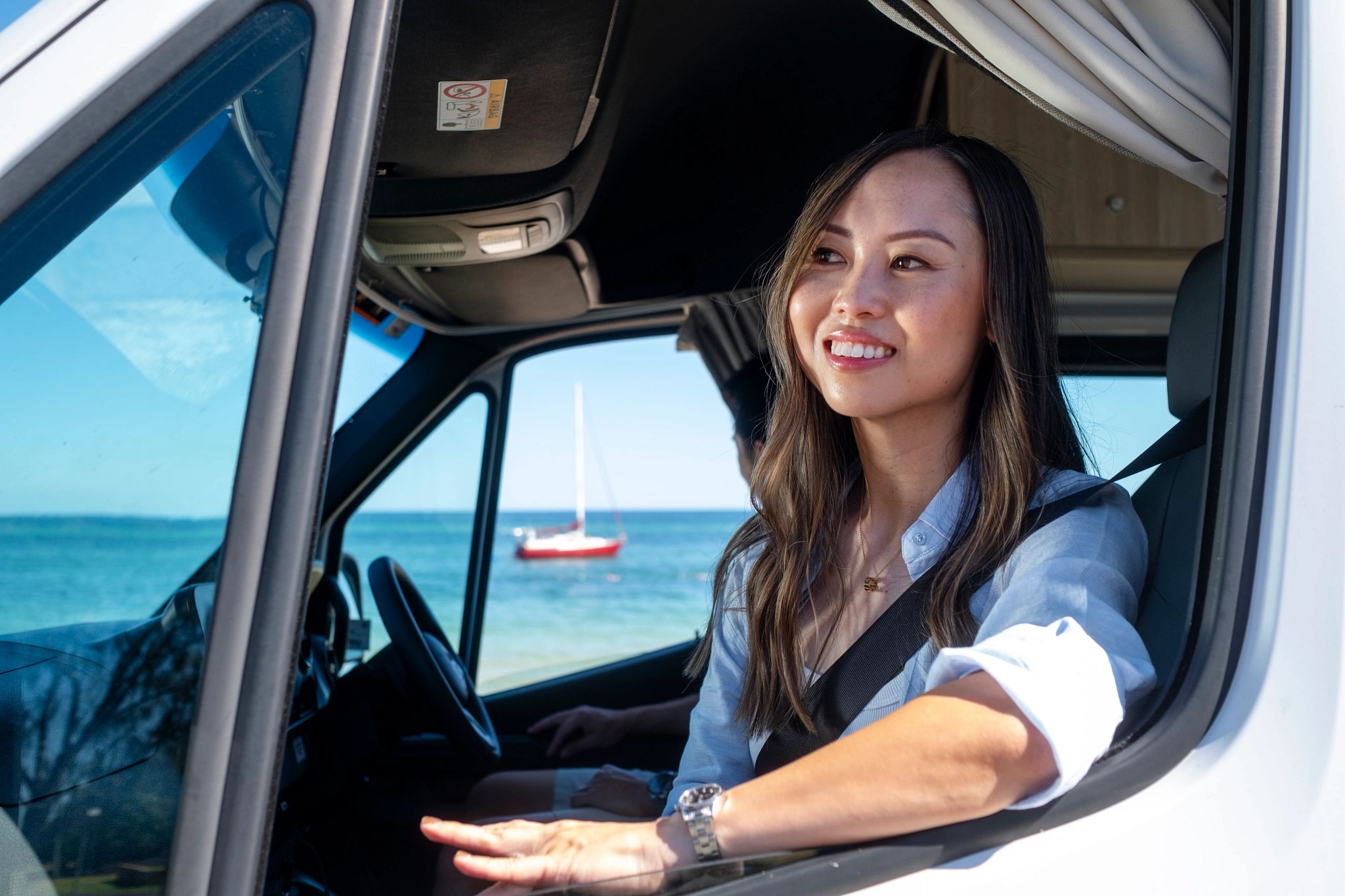
If you are nervous about driving, you are not alone. This is one of the most common beginner motorhome suggestions we hear. The key is to remember that driving a motorhome is less about special skill and more about adjusting your habits. A motorhome is larger and heavier than a car, so it needs more room to turn, merge and stop. Once you give yourself that extra space, the vehicle feels far more predictable.
Before setting off, adjust all mirrors carefully and get comfortable using them. Your mirrors are one of your most important tools, especially for watching blind spots and checking your position on the road. If your vehicle has a reverse camera, use it as an extra aid alongside your mirrors and careful observation. In tight spaces, reverse slowly and, if possible, ask a passenger to guide you from outside – having a spotter is very helpful. That is one of the top motorhome tips because it can reduce pressure immediately.
Keep your speed steady and sensible. You do not need to match faster traffic if conditions do not suit the vehicle. In wind, rain or on unfamiliar roads, slowing down is smart driving. Leave extra braking distance, take wider turns, and be especially alert at dawn and dusk in regional Australia where wildlife can appear suddenly.
Another piece of advice for motorhomes is to plan each driving day realistically. Long distances look manageable on a map, but motorhome trips are usually better when you allow time for breaks, fuel stops, food and rest. In remote parts of Australia, service stations can be far apart, so it pays to top up fuel earlier than you would in a city car. Relaxed planning is also one of the best motorhome maintenance tips, because a vehicle driven smoothly and sensibly tends to perform better throughout the journey.
The final piece of advice is to stick to driving during daylight hours only – avoid driving at dawn, dusk and during the night as this is when visibility is lower, and wildlife are most active.
Safe setup made simple: power, water, awning and levelling
Many first-time renters imagine campsite setup will be the hardest part of the trip. In reality, it often becomes a quick routine after a couple of stops. Start by parking on the flattest site available. A level vehicle is more comfortable and helps some onboard systems work properly.
When you are on a powered site, connect to mains power first if that is part of your setup. Then check your fresh water, turn on the water pump if needed, and make sure you know how to monitor tank levels. This is where a little pre-trip orientation really pays off. Once you know which gauge shows fresh water, grey water, and battery level, the vehicle becomes much more intuitive to use.
The awning is another feature that can feel intimidating at first, but it is usually manageable when used step by step. Unlock it, extend it carefully and secure it correctly. The main thing is not to rush and not to leave it out in strong wind – the awning is for shade only. Apollo’s expert perspective is that most motorhome systems are designed to be user-friendly, but they work best when treated with care rather than force.
Campervan information and etiquette: understanding waste disposal
Waste disposal is one of the biggest unknowns for beginners, but it is easy once you know the rules. Toilet waste, often called black water, must only be emptied at approved dump stations. It should never be dumped on the ground or into drains. This is a key part of campervan information and etiquette in Australia, and every renter should feel confident about it before starting their trip.
Grey water, which comes from the sink or shower, also needs care. Depending on where you are staying, it may need to go to a designated disposal point as well. In caravan parks and many managed sites, always follow local instructions. If in doubt, ask. It is far better to check than to assume.
Good campground etiquette goes beyond tanks. Keep your site tidy, respect quiet hours, dispose of rubbish properly, and avoid spilling dishwater or waste outside approved areas. These tips for motorhomes help protect the places you visit and make the experience better for everyone around you. Many campsites with powered sites will have designated dump stations to empty the toilet cassette and grey water tank.
Pre-campervan trip checklist: what to pack
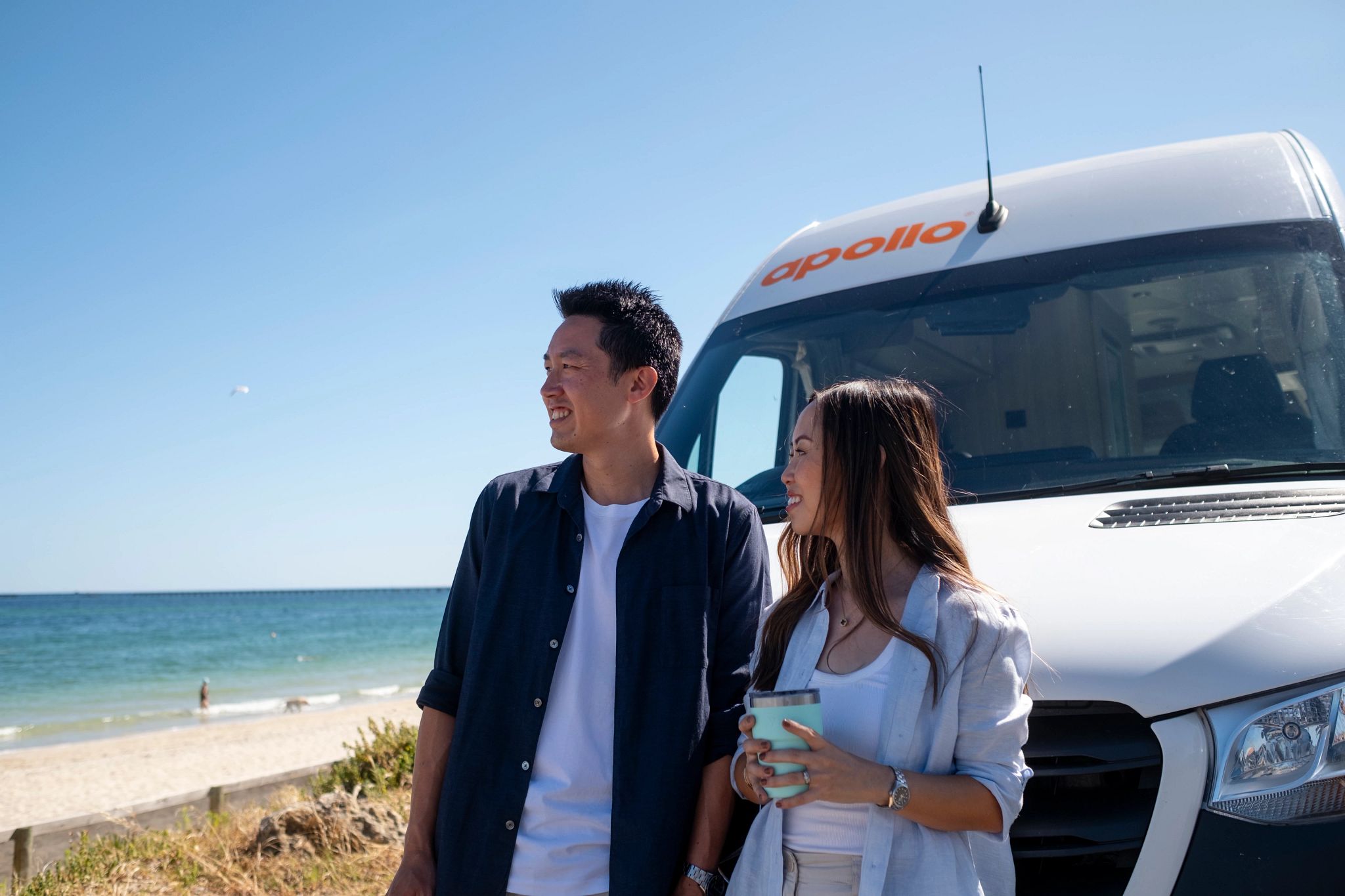
A smart packing list helps your first trip feel easy from day one. Start with the essentials: driver’s licence, booking details, insurance information, payment cards, medications, and emergency contacts. If required, bring your international driving permit as well. Keep all important documents together in one easy-to-reach place.
For day-to-day comfort, pack practical clothing rather than too much clothing. Layers work best in Australia, where mornings can be cool and afternoons warm. Include sun protection, rain gear, sturdy shoes, and anything you need for beach stops, bushwalks or cooler evenings. For all Apollo campervans, bedding and bath towels are included in your hire, so you will be comfortable on your first night on the road.
When thinking about food and gear, keep it simple. A few pantry basics, reusable water bottles, snacks for driving days, a torch, phone chargers, and insect repellent can make a big difference. Camping chairs and a small outdoor table are handy and can be added to your motorhome hire. These may sound like basic motorhome tips, but they are often the things that make a trip feel smooth and enjoyable.
Here’s a simple packing list:
Essential documents
- Driver's licence
- Booking confirmation
- Travel insurance details
- Emergency contacts
- Payment cards
- Any required permits
Clothing
- Comfortable layers
- Waterproof jacket
- Walking shoes
- Hat
- Swimmers
- Warm jumper for cooler evenings
Everyday essentials
- Reusable drink bottles
- Sunscreen
- Insect repellent
- Phone chargers
- Power bank
- Torch
- Medications
Food
Fresh groceries can easily be picked up as you travel we recommend you start with a few basics:
- Tea and coffee
- Cooking oil
- Salt and pepper
- Snacks
- Breakfast supplies
- Plenty of drinking water
Pro motorhome tips: expert advice from Apollo
Among all the pro motorhome tips, the most valuable is this: build a routine. At every departure, do the same checks. Windows shut, power disconnected, awning packed away, loose items secured, tanks checked, mirrors adjusted, gas turned off, and route confirmed. At every arrival, repeat your setup sequence in the same order. That consistency removes stress because you stop wondering whether you have forgotten something.
It also helps to think of a motorhome as a small, self-contained home rather than a complicated machine. You do not need to be an expert mechanic or seasoned road warrior. You just need to understand a few core systems and use them carefully. That is why many tips for new motorhome owners also work as advice for motorhomes hired for a holiday.
Finally, do not try to do too much in your first few days. Choose manageable driving distances, stay in well-equipped holiday parks if you want extra reassurance, and give yourself time to learn as you go. Confidence often grows quickly once you realise how practical a motorhome really is.
With the right preparation, hiring a motorhome in Australia can be one of the easiest and most rewarding ways to travel. You get the flexibility to move at your own pace, the comfort of having your essentials with you, and the freedom to discover more of the country without constantly packing and unpacking.
FAQs and quick answers
Do I need a special licence to drive a motorhome in Australia?
In many cases, no. Most standard motorhomes under 4.5 tonnes GVM can be driven with a regular car licence in Australia, though you should always check the vehicle details and rental terms.
Is driving a motorhome hard for beginners?
Not usually. It mainly takes a little adjustment for size, braking distance and turning space, and many first-time renters feel more comfortable after some time behind the wheel and a proper vehicle handover.
What should I check before leaving the rental branch?
Focus on the essentials - check mirrors, reverse camera, power connection, water system, gas shut-off, awning operation, waste disposal process, and safety equipment like the fire extinguisher and smoke detector.
Can I park a motorhome anywhere overnight?
No. In Australia, travellers need to stay in designated camping, caravan park or approved overnight parking areas, depending on local rules. You can search for campgrounds in the thl Roadtrip App.
What is the difference between grey water and black water?
Grey water and black water are handled differently. Grey water comes from sinks and showers, while black water is toilet waste. Black water must be emptied only at approved dump stations.
Is the awning difficult to use?
Usually not when it has been explained properly. Follow the step-by-step process from your handover and avoid rushing. Remember that the awning is for shade only and should not be used in windy or rainy conditions.
What are the most important motorhome maintenance tips for renters?
Keep it simple. Drive smoothly, monitor fuel and water levels, secure loose items, check tyres visually, and follow a consistent setup and pack-down routine at each stop.
Ready to put these motorhome tips for beginners into practice?
When you’re ready, you can easily book your Apollo camper online and pick it up from your closest Apollo branch before setting off on your Australian motorhome adventure.
